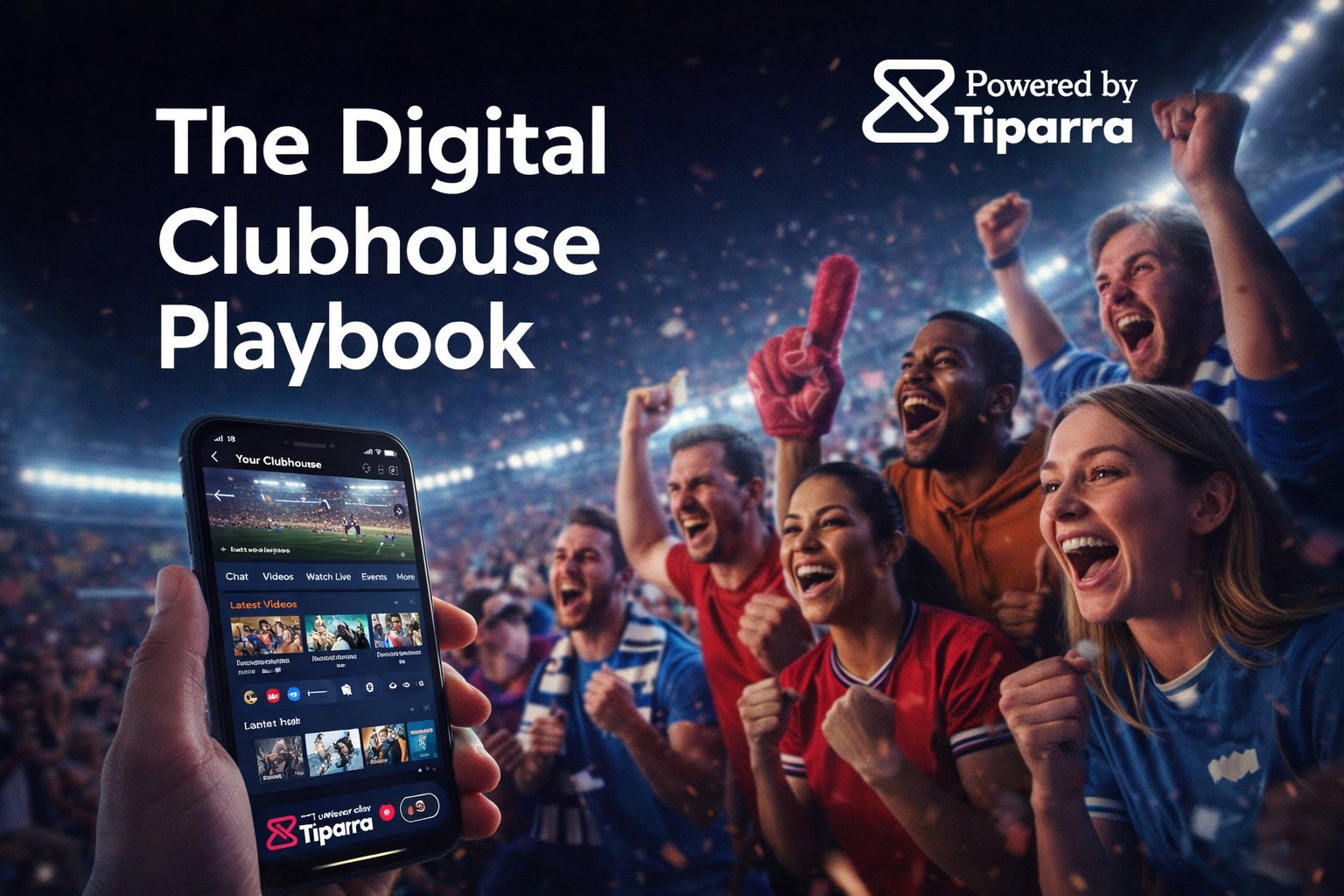
The Digital Clubhouse Playbook
The physical clubhouse was the beating heart of every community organisation. But your fans aren't just at the ground on Saturday — they're on their phones 24/7, and you're trying to reach them on rented land. It's time to build your own digital home.
Think back to the last time you walked into your local sports club. There's a specific vibe, right? The smell of the grass, the trophy cabinet gathering a bit of dust, the volunteer behind the bar who knows everyone's name, and that sense of "this is our place."
For decades, the physical clubhouse was the beating heart of every community organisation, sports team, and local event. It was where the news broke, where the celebrations happened, and where the community lived.
But times have changed. Your fans aren't just hanging out at the ground on Saturday afternoon; they're on their phones 24/7. They're scrolling, clicking, and looking for a connection. The problem? Most clubs and events are trying to build that connection on "rented land" — social media platforms that change the rules every time you get comfortable.
Enter the Digital Clubhouse.
In this playbook, we're going to show you how to stop renting your audience and start owning your own digital real estate. Whether you're a professional sports team, a local festival, or a tourism destination, it's time to build your own home in the digital world.
The Problem with "Renting" Your Fans
We love social media. It's great for reach. But relying solely on Facebook, Instagram, or X (formerly Twitter) to reach your community is like building a massive extension on a house you don't own. The landlord can hike the rent, change the locks, or hide your front door whenever they feel like it.
When you post on social media, you're at the mercy of the algorithm. Only a tiny fraction of your followers actually see your content unless you pay to boost it. Worse yet, you don't own the data. You don't know who your fans are, what they like, or how to reach them directly if the platform decides to go offline.
The Digital Clubhouse is the solution. It's a central hub — usually a white-label mobile app — where you make the rules. It's your house, your fans, and your data.
What Exactly is a Digital Clubhouse?
A Digital Clubhouse isn't just a website. It's a comprehensive ecosystem designed for engagement. It's the one-stop shop where a fan or visitor goes to get everything they need from your brand.
For a sports club, it's where they find live scores, player profiles, and exclusive behind-the-scenes content. For a tourism destination, it's the interactive map, the local secrets, and the "what's on" guide. For an event, it's the digital ticket, the schedule, and the interactive fan zones.
At Tiparra, we call this FEaaS: Fan Engagement as a Service. We provide the tech, the framework, and the "walls" of your digital clubhouse, but we leave the keys in your hands so you can brand it, manage it, and grow it.
The goal is to create a "velvet rope" experience. You give the general public the basics on social media, but you bring your true believers into the Digital Clubhouse for the premium experience.
The Three Pillars of Success
To build a Digital Clubhouse that actually works (and doesn't just sit in the App Store gathering digital cobwebs), you need to focus on three specific things: Data, Communication, and Revenue.
Data Ownership: The Gold Mine
In the modern world, data is more valuable than oil. When a fan downloads your app and creates a profile, they aren't just a "like" anymore; they are a known entity. You know their name, their interests, and how they interact with your brand.
This first-party data allows you to move away from "spray and pray" marketing. Instead of sending one generic email to 5,000 people, you can send a targeted notification to the 500 people who actually care about a specific player or event.
Direct Communication: The Megaphone
Push notifications are the secret weapon of the Digital Clubhouse. Unlike an email that gets buried in a promotions tab or a social post that gets buried by the algorithm, a push notification lands right on the lock screen.
It's personal, it's immediate, and it's direct. Whether it's a "Game Starting Now!" alert or a "Flash Sale at the Merch Stand," you have a direct line to your community's pockets.
Revenue Generation: The Cash Cow
A Digital Clubhouse shouldn't be a cost centre; it should be a revenue driver. By owning the platform, you unlock new "digital inventory" for your sponsors.
Instead of just putting a sponsor's logo on a physical fence or a jersey, you can give them:
- Sponsored interactive polls
- Direct-to-consumer digital coupons
- Exclusive "brought to you by" video content
- Branded fan games and activations
This makes your sponsorship packages way more attractive because you can provide actual data on how many people saw and clicked on their content.
Tailoring Your Clubhouse to Your Industry
The beauty of a white-label platform like Tiparra is that the "bones" are solid, but the "decor" is up to you. Different industries use their Digital Clubhouses in different ways.
Professional and Amateur Sports
For professional sports teams, the focus is often on the match-day experience. Live stats, digital programs, and fan-voted "Player of the Match" features keep the crowd engaged even during half-time. For community clubs, it's about simplifying communication and making the club feel bigger than just the weekend game.
Tourism and Destinations
Destinations use their Digital Clubhouse to guide visitors through an experience. Think of it as a local expert in your pocket. By using Digital Passport tools, you can highlight hidden gems, promote local businesses, and gather feedback from visitors in real-time.
Events and Festivals
When you're running a festival, information changes fast. A Digital Clubhouse allows for real-time updates — "The main stage set has been moved back 15 minutes" — and provides an interactive way for attendees to plan their day.
How to Start Building
Building a custom app from scratch usually costs six figures and takes a year of development. Nobody has time for that. This is where the Tiparra FEaaS model shines. We've already built the high-performance engine; you just need to pick the paint job.
Step 1: Identify Your Goals
What do you want your fans to do? Do you want more ticket sales? Better sponsor ROI? More member data? Start with the "Why."
Step 2: Map the Journey
What does the "Digital Clubhouse" look like on a Tuesday? What about a Saturday? Map out the content your audience actually wants to see.
Step 3: Choose Your Features
Don't overcomplicate it on day one. Start with the essentials — news, schedules, and notifications — and then add the "fancy" stuff like augmented reality or gamification later. You can explore all our features here.
Step 4: Launch and Incentivise
Give people a reason to come inside. Offer "App-Only" discounts or exclusive player interviews. Once they are through the digital doors, the engagement begins.
The Future is Owned, Not Rented
The era of social media dominance is shifting. We're moving toward a "Small-Circle" digital world, where people want deep engagement with the brands and communities they actually care about, rather than a broad, shallow experience on a global platform.
Building your Digital Clubhouse is about future-proofing your organisation. It's about ensuring that no matter what happens with social platforms tomorrow, you still have a direct, profitable, and meaningful relationship with your community.
Ready to stop renting and start owning? Explore the Digital Clubhouse concept or check out our pricing to see how we can help you get started.
Want the full playbook as a downloadable guide? Grab the free Digital Clubhouse Playbook — no spam, just the strategy.
Article Outline
- 1. The problem with "renting" your fans
- 2. What exactly is a Digital Clubhouse?
- 3. The three pillars of success: Data, Communication, Revenue
- 4. Tailoring your Clubhouse to your industry
- 5. How to start building
- 6. The future is owned, not rented